
The 24-Hour Conversion Window: How AI Phone Agents Turn Trial Classes into Full Enrollments for Tutoring Centers
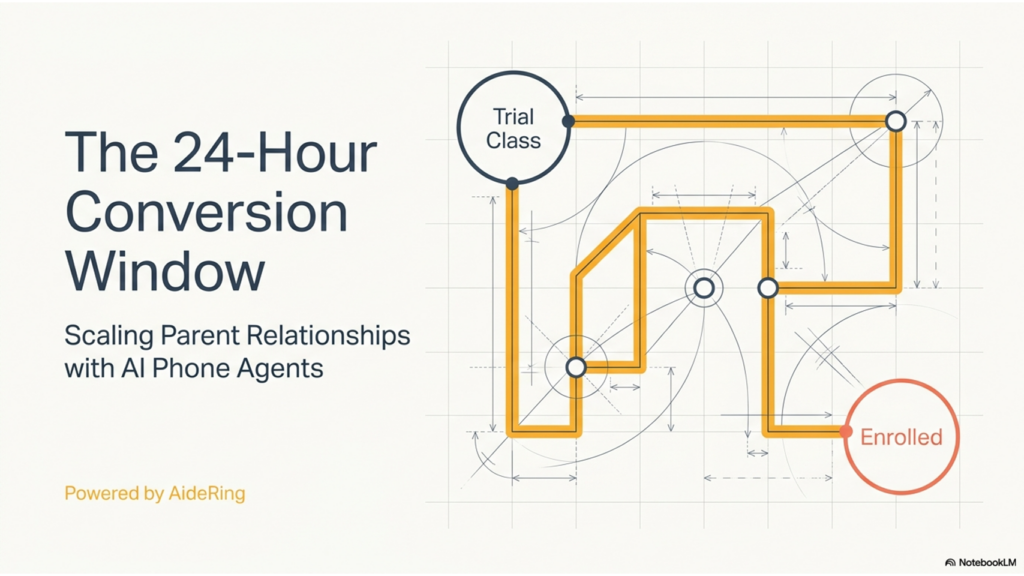 Every parent who walks out of your trial class is carrying a decision they haven’t made yet. They liked what they saw. Their kid seemed engaged. The teacher was sharp, the materials looked solid. But they need to “think about it.” They need to “talk to their spouse.” They need to “check the schedule.”
Here’s the brutal truth. Most of those parents are never coming back.
Not because your program isn’t good. Because the gap between interest and action is where human psychology does its worst work. Doubt creeps in. Competing priorities stack up. The emotional momentum of that 45-minute trial class evaporates into the noise of daily life. By the time your staff gets around to calling them, if they call at all, the parent has mentally moved on.
This is why tutoring centers that rely on manual follow-up are leaving massive revenue on the table. And this is exactly where AI Phone Agent workflows change the entire game.
The Psychology of the Post-Trial Moment
Behavioral economists have studied this for decades. The peak-end rule tells us that people judge an experience largely by how they felt at its most intense point and at its end. A trial class hits both of those marks. The child solves a problem they couldn’t solve before. The parent sees competence and confidence in real time. The session ends on a high note.
That emotional peak creates a narrow window of opportunity. Research on consumer decision-making shows that the probability of conversion drops sharply after the first 24 hours. Not gradually. Sharply. By hour 48, you’re fighting an uphill battle against rationalization, distraction, and the natural human tendency to default to inaction.
Smart tutoring operators know this intuitively. That’s why the best centers have someone calling parents within hours of a trial class. But here’s the problem. Human staff can’t scale that way. Your best salesperson can only make so many calls. They get busy. They have other duties. They call at the wrong time and get voicemail. They sound tired, or rushed, or like they’re reading from a script.
An AI Phone Agent doesn’t get tired. It doesn’t forget. It calls at exactly the right moment, with exactly the right message, and it adapts in real time based on how the parent responds.
The Trial-to-Enrollment Workflow: What Actually Happens
Let’s walk through a real scenario. A parent brings their 8-year-old to a math trial class at your tutoring center on Saturday morning. The class goes well. The child participates. The teacher gives positive feedback. The parent leaves with a brochure and a “we’ll be in touch” from the front desk.
Here’s what happens next in a center running an AI Phone Agent workflow built on AideRing.
Hour 1: Data Capture and Scoring
The moment the trial class ends, your CRM, let’s say HubSpot or a custom system, logs the attendance. The AI workflow pulls the parent’s contact info, the class type, the teacher’s notes, and any observed behavior. Did the child finish the worksheet? Did the parent ask questions about pricing? Did they mention a specific pain point, like “my kid struggles with word problems”?
All of this feeds into a lead scoring model running in JavaScript inside the AideRing environment. High-intent signals get flagged. The parent who asked about pricing and took extra materials? That’s a hot lead. The parent who seemed distracted and left early? That needs a softer touch.
Hour 2 to 6: The Satisfaction Call
The AI Phone Agent places the first call. Not a sales call. A satisfaction call. This is critical. The psychology here is straight out of social engineering and persuasion research. People are far more receptive to someone who seems to care about their experience than to someone who immediately asks for money.
The AI opens naturally. “Hi, this is Sarah from Excel Math Center. I wanted to check in after Emily’s trial class this morning. How did she feel about it?”
If the parent is positive, the AI deepens the conversation. “That’s wonderful to hear. What stood out to you most?” This isn’t small talk. It’s intelligence gathering. The parent’s answer gets transcribed, analyzed for sentiment, and stored back in the CRM. If they mention specific concerns, the AI addresses them. If they mention a competitor, the AI notes it. If they sound hesitant, the AI picks up on vocal tone cues and shifts to objection handling.
If the parent doesn’t answer, the AI leaves a warm voicemail and schedules a callback for the optimal time based on historical data. Maybe Sunday evenings work best for this demographic. The system knows that because it’s been learning from hundreds of previous calls.
Hour 6 to 12: The Offer Window
For parents who expressed satisfaction, the AI places a second call within hours. Timing matters here. Behavioral science shows that offering a commitment device while emotional resonance is still high dramatically increases conversion. The parent still remembers their child’s smile. They still feel the relief of finding a potential solution.
The AI presents a time-limited enrollment offer. “Since Emily had such a great experience today, I’d love to offer you our new student package. If you enroll by tomorrow night, we can lock in her spot with Ms. Chen and include the first month of materials at no charge. That’s a $120 value.”
This isn’t random discounting. It’s strategic price anchoring combined with scarcity and loss aversion. The parent isn’t just buying tutoring. They’re securing a specific teacher, a specific time slot, and a specific outcome for their child. The AI can even reference real-time data. “Ms. Chen’s Tuesday 4 PM class only has two spots left.”
If the parent says they need to think about it, the AI doesn’t push aggressively. Instead, it uses a technique from sales psychology called the alternative close. “I completely understand. Would it help if I held the spot until 8 PM tomorrow so you have time to decide without worrying about it filling up?”
This creates a micro-commitment. The parent isn’t saying yes to enrolling. They’re just saying yes to holding a spot. But psychologically, that small yes starts the commitment consistency engine. People who agree to small requests are significantly more likely to agree to larger related requests later.
Hour 12 to 24: Closing the Loop
For parents who still haven’t enrolled, the AI places a final call. This one is shorter and more direct. It references the previous conversation. “Hi, this is Sarah again. I wanted to follow up on holding Emily’s spot in Ms. Chen’s class. I know you wanted to talk it over with your husband. Did you get a chance to discuss it?”
The AI can now adapt based on the parent’s response. If they say they’re worried about the cost, the AI can offer a payment plan. If they say the schedule doesn’t work, the AI can check Google Calendar integration in real time and suggest alternative slots. If they say they’re considering another center, the AI can pivot to differentiation without being defensive.
And here’s where the workflow gets really sophisticated. If the parent enrolls during the call, the AI doesn’t just say congratulations and hang up. It triggers a cascade of automations. Stripe processes the payment immediately. The CRM updates the parent’s status from “trial” to “enrolled.” Google Calendar books the recurring class schedule. A welcome email goes out via Gmail or SMTP with orientation details. A Slack notification hits your operations channel so the front desk team knows to prepare the welcome packet. The AI even schedules a follow-up call for two weeks later to check on the child’s progress.
If the parent doesn’t enroll, the workflow doesn’t just drop them. The CRM tags them as “nurture” and adds them to a long-term re-engagement sequence. Maybe they get a call in 30 days about a new workshop. Maybe they get a personalized message after midterm results come out. The AI remembers every detail of the conversation. It doesn’t start from zero next time.
Beyond the Trial: The Full Revenue Engine
The trial-to-enrollment workflow is the headline act, but it’s only one part of what a tutoring center can automate with AI Phone Agents. Let’s look at the other high-value workflows that most centers ignore because they don’t have the staff bandwidth to execute them consistently.
Re-engaging Dormant Students
Every tutoring center has a graveyard of former students. Kids who took classes for six months, made real progress, then stopped coming. Maybe the family moved. Maybe sports season started. Maybe they just drifted away. These aren’t cold leads. These are warm relationships that went quiet.
An AI Phone Agent can run quarterly reactivation campaigns. The AI calls former parents with a specific, personalized hook. “Hi, this is Sarah from Excel Math. I was thinking about David because our advanced algebra workshop starts next month and I immediately thought of him. He had such a strong foundation when he was with us. Is he still doing math enrichment?”
This works because it doesn’t feel like a sales call. It feels like a teacher who remembers and cares. The AI pulls the student’s historical data, references specific achievements from their time at the center, and offers a low-friction way back in. Maybe a single workshop instead of a full semester commitment.
Reducing Missed Appointments
No-shows destroy tutoring economics. You’ve reserved a teacher, a room, and materials for a student who doesn’t show up. The parent often doesn’t even call to cancel. They just ghost.
An AI Phone Agent can run proactive confirmation workflows. Not generic text messages that parents ignore. Actual phone calls 24 hours before the session. “Hi, just confirming Emily’s math class tomorrow at 4 PM with Ms. Chen. Is she still able to make it?”
If the parent says no, the AI can immediately offer rescheduling options by checking Google Calendar in real time. It can even suggest a make-up session before the missed slot goes to waste. The parent feels taken care of. Your utilization rate stays high.
Upselling and Cross-Selling
Parents who trust your center are your best source of additional revenue. But most upselling in tutoring is awkward. A teacher mentions a summer program in passing. A flyer goes home in the backpack. It’s passive and ineffective.
An AI Phone Agent can identify upsell moments with precision. A student just aced their midterm after three months of tutoring? The AI calls the parent within 48 hours. “I wanted to share some great news about Emily’s progress. Her teacher mentioned she’s ready for our advanced problem-solving group. Would you be open to hearing about it?”
The timing is everything. The parent is feeling the value of your service right now. The AI strikes while that emotional credit is in the bank.
Gathering Intelligence, Not Just Feedback
Most tutoring centers send satisfaction surveys that nobody fills out. The ones who do respond are either extremely happy or extremely angry. You learn nothing about the silent majority.
AI Phone Agents can conduct conversational feedback calls that feel like check-ins, not interrogations. “Hi, I wanted to see how David’s been feeling about his classes lately. Does he seem excited to come?”
Parents will tell an AI things they won’t write in a survey. They’ll mention that the parking is annoying, or that the waiting area is too cold, or that they wish they got more progress updates. This is pure business intelligence. The AI transcribes everything, flags sentiment trends, and pushes insights to your Slack channel or Notion dashboard.
Even better, the AI can detect early warning signs of churn. If a parent says “we’re just really busy right now” or “we’re not sure if we’re continuing next semester,” the AI tags the account as “at risk” and triggers a retention workflow. Maybe the center director gets an alert. Maybe the AI schedules a personal call from the teacher. You catch the leak before it becomes a flood.
Automating Inbound Lead Qualification
When a parent calls your center asking about programs, what happens? If you’re lucky, someone knowledgeable answers. If you’re busy, they get voicemail or a rushed conversation. If it’s after hours, they get nothing.
An AI Phone Agent can handle inbound calls 24/7. It can answer questions about pricing, schedules, and teaching methodology. It can qualify the lead by asking about the child’s grade, subject needs, and goals. It can book trial classes directly into Google Calendar. It can send follow-up emails with program details before the parent even hangs up.
The parent gets immediate, helpful service. Your staff only handles the calls that actually require human judgment. Your lead capture rate goes up dramatically, especially for parents who call during evenings and weekends when your center is closed.
Why This Works: The Behavioral Architecture
The power of these workflows isn’t in the technology. It’s in the psychology. Every call is designed around how humans actually make decisions, not how we wish they did.
Reciprocity is built into the satisfaction call. The AI gives attention and care first, before asking for anything. Social proof is woven into enrollment conversations. “Three other parents from Emily’s school enrolled this week.” Scarcity is real and data-driven, not fabricated. “Ms. Chen’s class has one spot left.” Commitment consistency is triggered through micro-yeses. Loss aversion is activated by framing what the parent stands to lose by waiting.
The AI also solves a problem that human callers face constantly. It never sounds desperate. It never gets frustrated by objections. It never has a bad day. Its tone is consistently warm, professional, and patient. Parents don’t feel pressured. They feel heard. And that emotional safety is what converts.
The Integration Layer: Where the Magic Actually Happens
What makes this operational, not theoretical, is the API ecosystem. AideRing’s JavaScript execution environment means your AI Phone Agent isn’t just talking. It’s doing.
When a parent says yes to enrollment, Stripe processes the payment before the call ends. HubSpot updates the deal stage from “trial completed” to “closed won.” Google Calendar blocks the recurring time slot. Gmail sends the welcome packet. Slack notifies your team. Airtable logs the conversion for your weekly dashboard.
If a parent asks about a specific teacher’s availability, the AI queries your internal CRM in real time. If they mention their child has a test coming up, the AI can check your curriculum database and suggest a targeted prep session. If they want to know what other parents think, the AI can reference aggregated review data from your feedback system.
This isn’t a phone call. It’s a business process that happens to use voice as its interface.
The Real Competitive Advantage
Tutoring is a relationship business. Always has been. Parents don’t buy math lessons. They buy confidence, peace of mind, and a sense that someone cares about their child’s future. The centers that win are the ones that scale that relationship without diluting it.
AI Phone Agents don’t replace the human connection at tutoring centers. They amplify it. They ensure that every parent gets consistent, timely, personalized attention. They free your human staff from repetitive follow-up tasks so they can focus on teaching, mentoring, and handling the complex situations that genuinely need a human touch.
The center that calls every trial parent within two hours, follows up with a perfectly timed offer, handles rescheduling without friction, and reactivates dormant families quarterly, is going to outperform the center that relies on sticky notes and hope. Every single time.
The question isn’t whether AI Phone Agents can work for tutoring centers. The question is how fast you can deploy them before your competitors do.
Because that parent who walked out of your trial class today? They’re getting a call from someone. Make sure it’s you.
—
AideRing helps tutoring centers and educational service providers build intelligent AI Phone Agent workflows that convert trial students, reduce no-shows, and scale personalized parent communication. From HubSpot to Stripe to Google Calendar, our JavaScript execution environment connects your entire operational stack into seamless, voice-powered business processes.